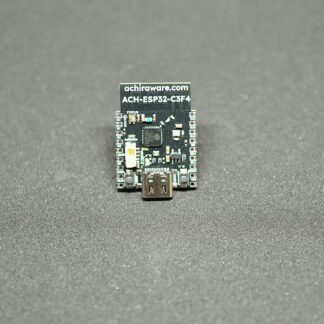
Low-power development board built around the ESP32-C3FH4 — Espressif’s RISC-V single-core wireless chip. Wi-Fi and Bluetooth LE. Hand-assembled in Portugal.
Technical specifications
- MCU: ESP32-C3FH4
- CPU: Single-core RISC-V @ 160 MHz
- Flash: 4 MB (embedded)
- SRAM: 400 KB
- Wi-Fi: 802.11 b/g/n (2.4 GHz)
- Bluetooth: 5.0 (BLE)
- USB: USB-C (power + programming, CDC)
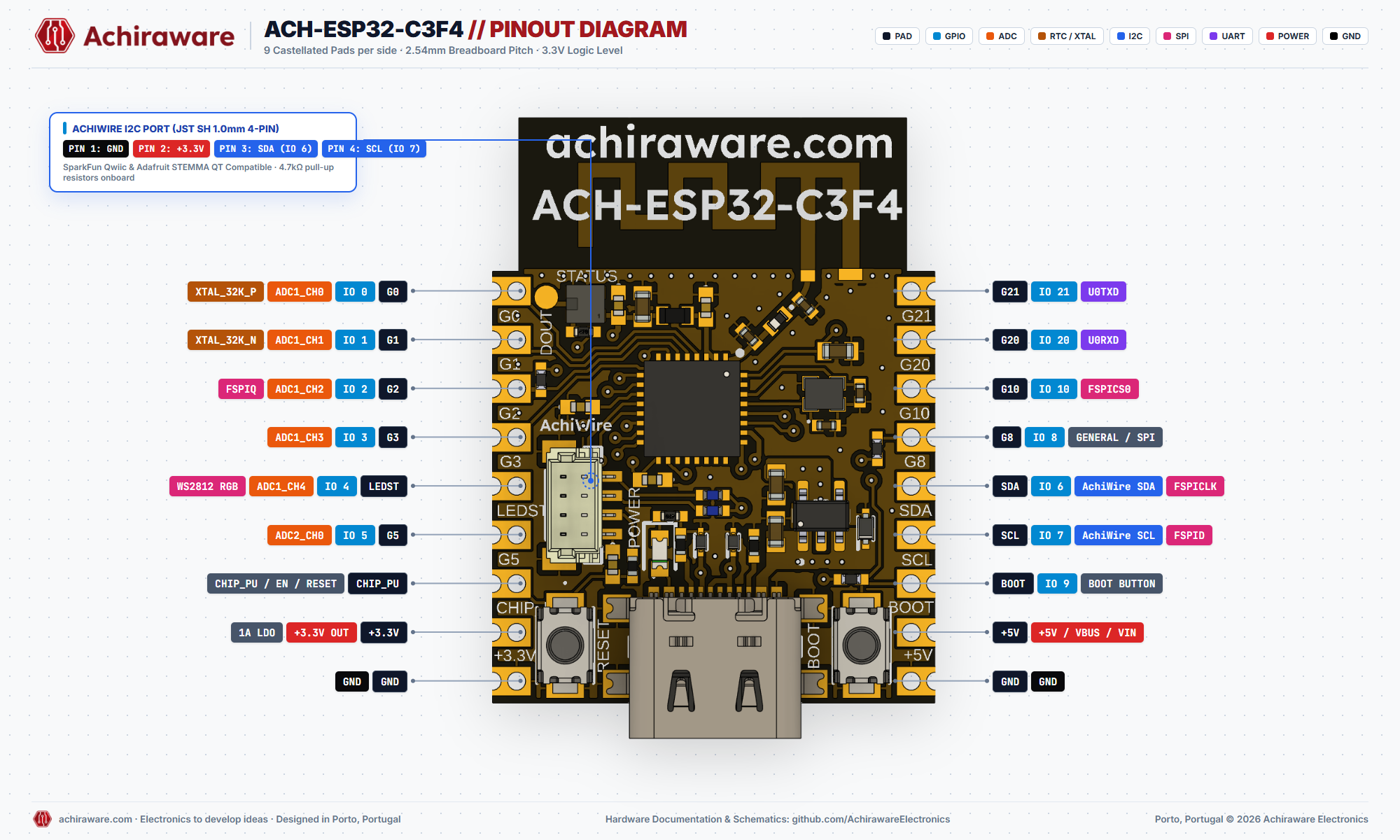
- AchiWire port: JST SH 1.0mm 4-pin · GND / +3.3V / SDA / SCL · compatible with Qwiic and STEMMA QT
- Logic level: 3.3 V
- Supply: 3.3 V – 5.5 V via USB-C or VIN
Pre-flashed firmware included. I2C cable in the box. Designed in Porto, Portugal.
Description
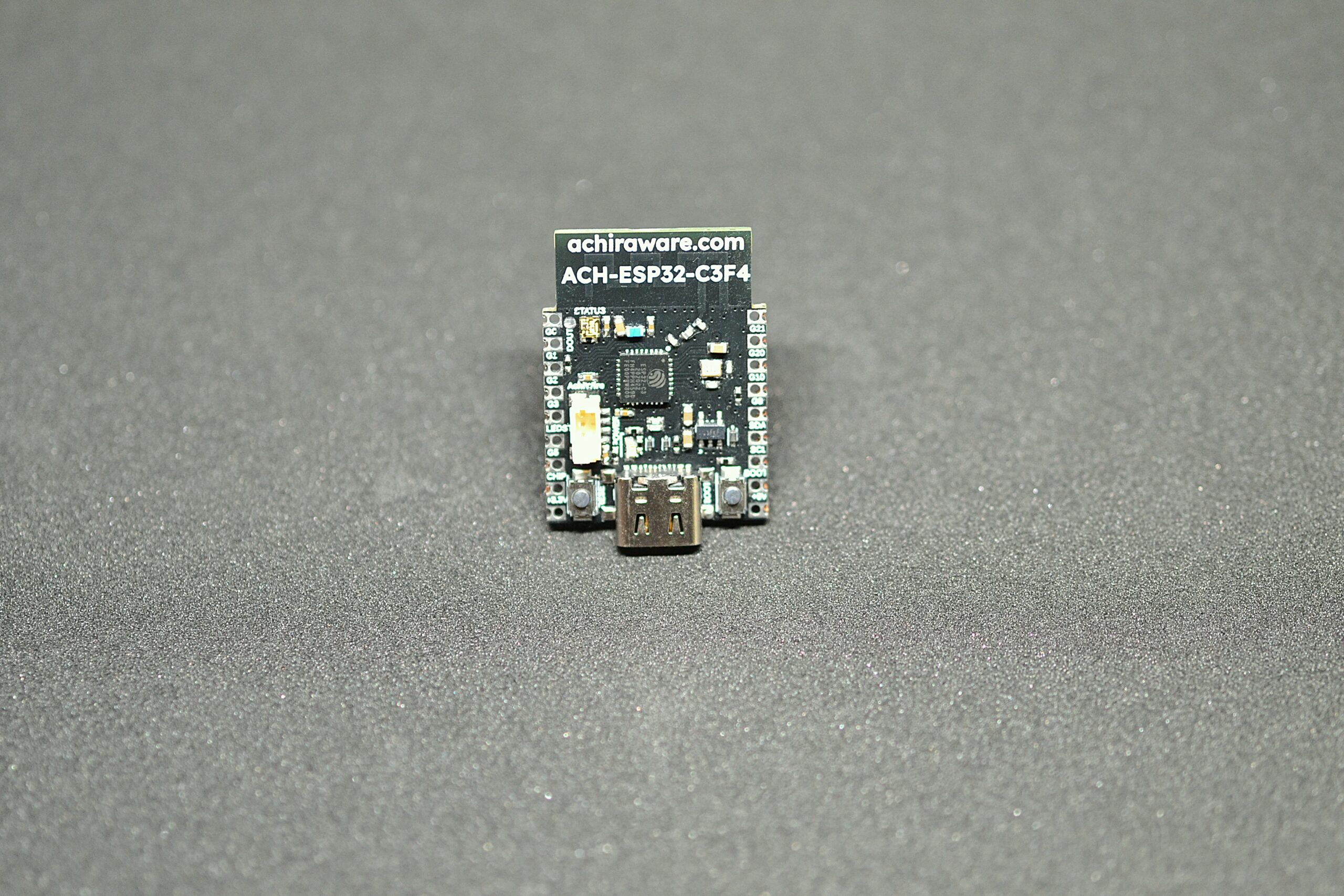
Custom development board built around the genuine ESP32-C3FH4 microcontroller — RISC-V architecture with Wi-Fi and Bluetooth LE, designed and hand-assembled in Portugal.
Microcontroller
- ESP32-C3FH4: 32-bit RISC-V single-core @ 160MHz
- 4MB integrated Flash
- 2.4GHz Wi-Fi 4 · Bluetooth LE 5.0
- Hardware security: AES-128, RSA-3072, secure boot, flash encryption
Board features
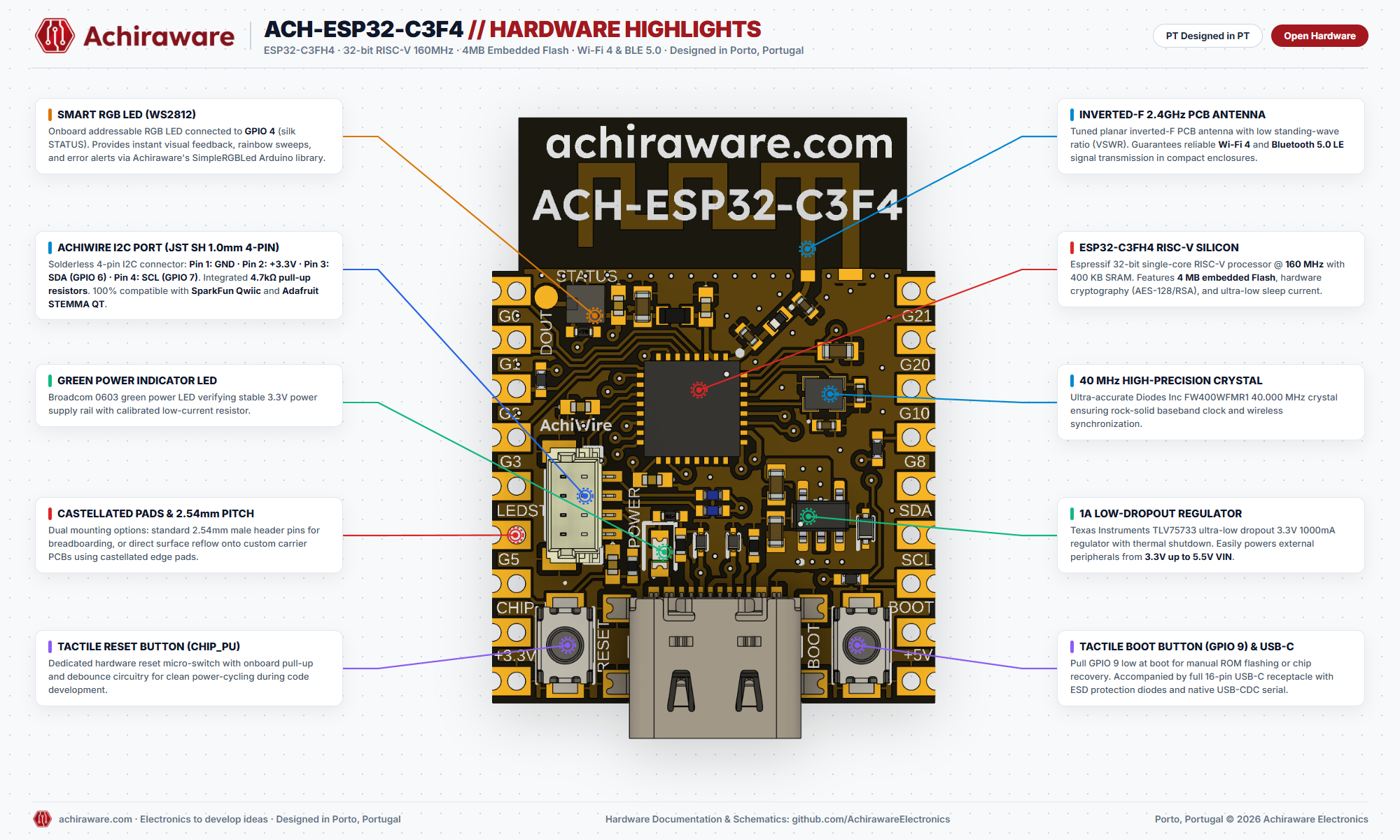
- Precision-tuned PCB antenna — reliable 2.4GHz performance, no external components needed
- Castellated holes + 2.54mm through-hole headers — use on breadboard or solder directly onto your PCB as a module
- JST SH 1.0mm I2C connector — compatible with Qwiic (SparkFun) and STEMMA QT (Adafruit) ecosystems
- Addressable RGB LED (GPIO 4, WS2812)
- USB-C — power and UART programming
- LDO voltage regulator 1A — power from 5V via USB-C or up to 5.5V on VIN
- All available GPIO broken out
- Approximately 50 × 30mm · Designed in PT
In the box
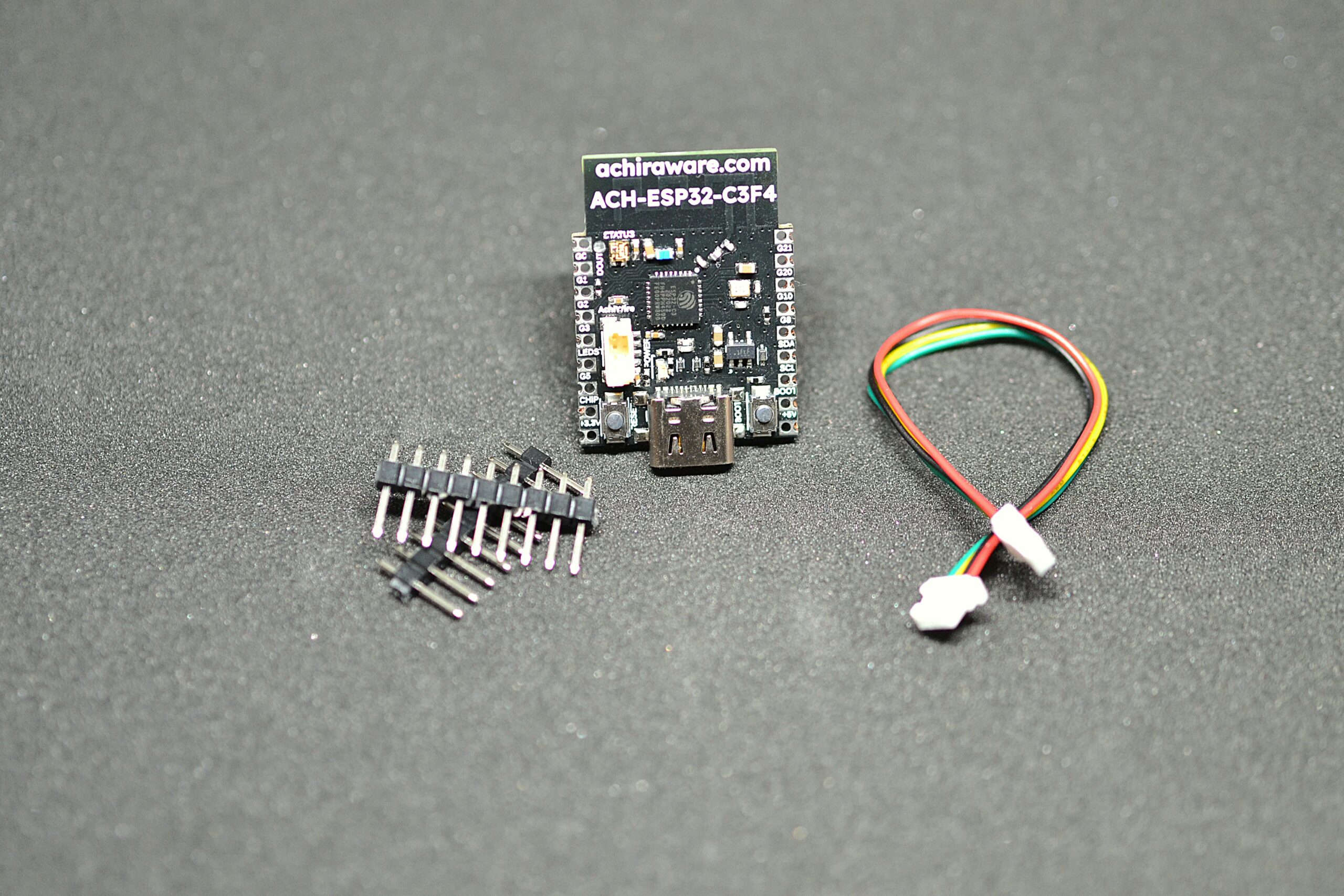
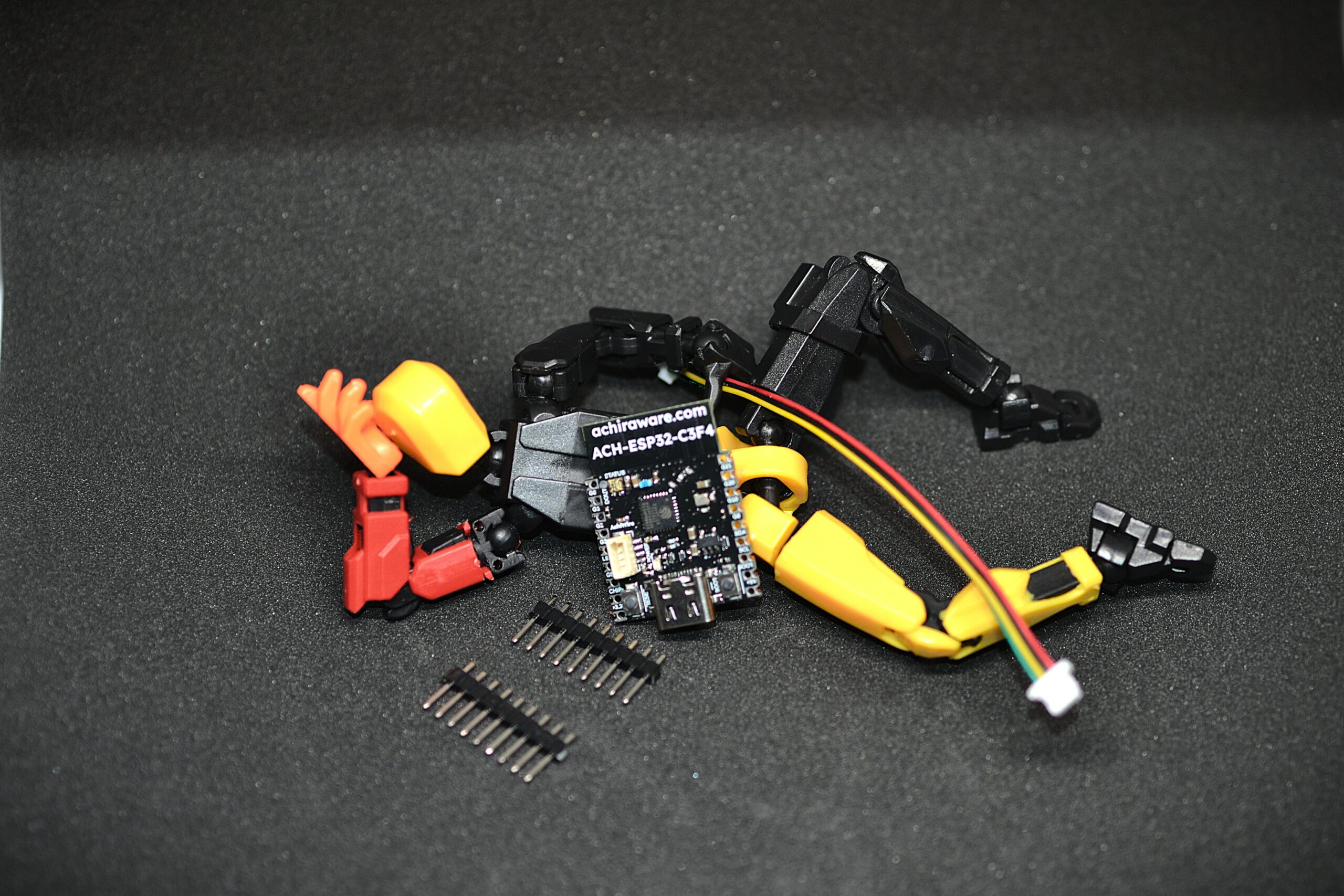
- ACH-ESP32-C3F4 board
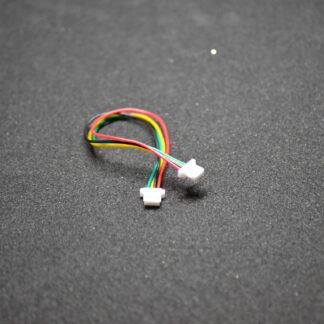
- JST SH 1.0mm 4-pin I2C cable
- 2.54mm male headers
Compatible with: ESP-IDF · Arduino framework · MicroPython · Zephyr RTOS
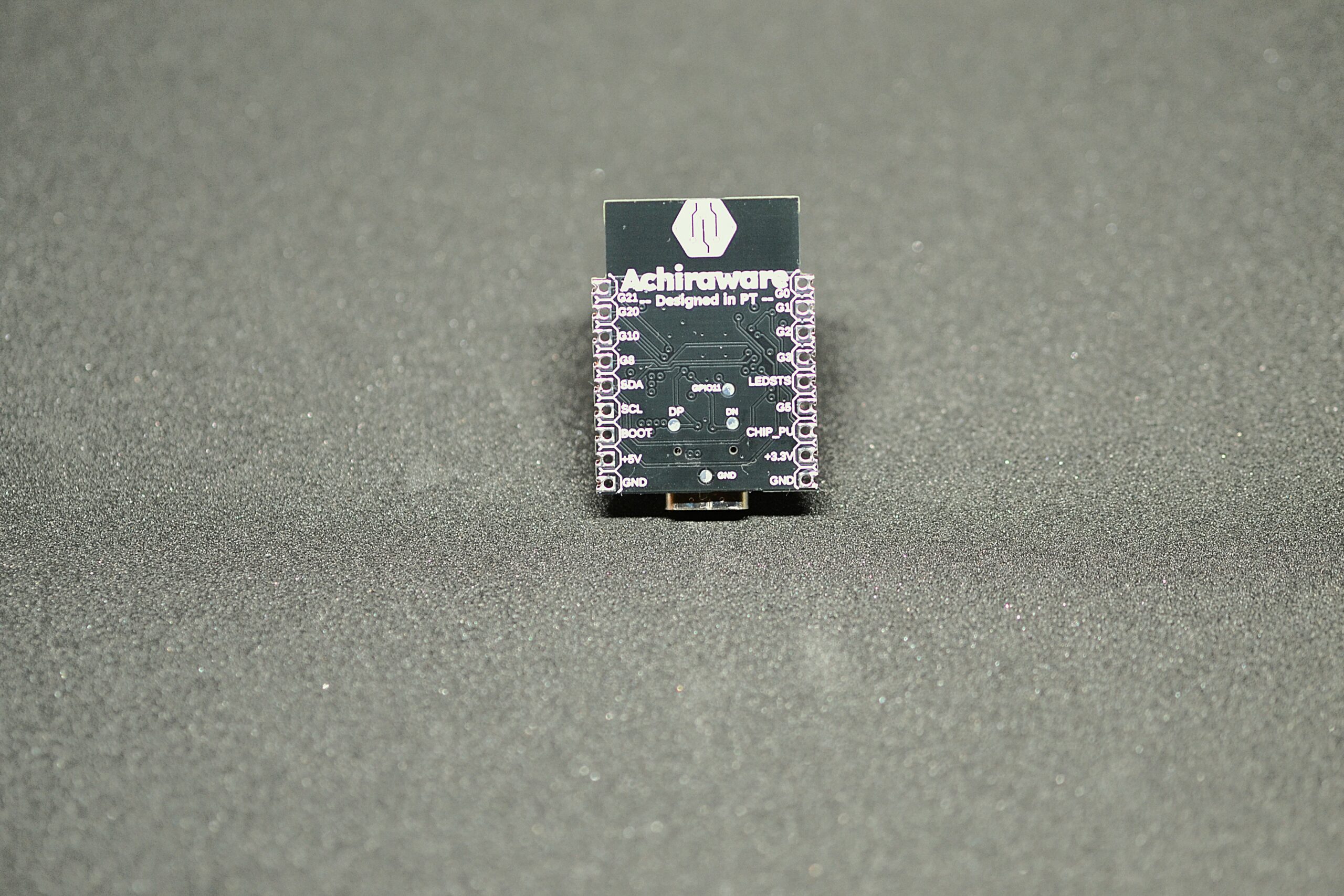
Pinout — GPIO exposed on the headers (2.54 mm)
Viewed with USB-C at the bottom.
| Left pin |
Right pin |
| GPIO0 |
GPIO21 |
| GPIO1 |
GPIO20 |
| GPIO2 |
GPIO10 |
| GPIO3 |
GPIO8 |
| GPIO4 — RGB LED (WS2812) |
GPIO6 — SDA (AchiWire) |
| GPIO5 |
GPIO7 — SCL (AchiWire) |
| CHIP_EN (Reset) |
BOOT |
| +3.3 V |
+5 V |
Arduino IDE
- Connect the board with a data USB-C cable.
- Install the ESP32 Arduino core.
- Board: ESP32C3 Dev Module
- USB CDC On Boot: Enabled (required for Serial over USB-C)
- Select the correct COM port and upload.
ESP-IDF
- Install ESP-IDF.
- Set target and build:
idf.py set-target esp32c3
idf.py build flash monitor
MicroPython
- Download MicroPython for ESP32-C3.
- Flash with esptool:
esptool.py --chip esp32c3 write_flash -z 0x0 esp32c3-*.bin
- Connect with Thonny or any serial terminal at 115200 baud.
Blink — Addressable RGB LED (Arduino)
Uses SimpleRGBLed (install from Arduino Library Manager). RGB LED on GPIO 4.
#include <SimpleRGBLed.h>

SimpleRGBLed led(4);  // GPIO 4

void setup() {
  led.begin();
}

void loop() {
  led.setColor("green");  delay(500);
  led.setColor("red");    delay(500);
  led.setColor("blue");   delay(500);
  led.off();              delay(500);
}
I2C — AchiWire Connector (JST SH 1.0 mm)
4.7 kΩ pull-up resistors on board. Default pins:
- SDA → GPIO 6
- SCL → GPIO 7
#include <Wire.h>

void setup() {
  Wire.begin(6, 7);  // SDA, SCL
  // Your I2C code here
}
GitHub Repository
Hardware design files, schematics, and code examples for the ACH-ESP32-C3F4.
View on GitHub →



Reviews
There are no reviews yet.