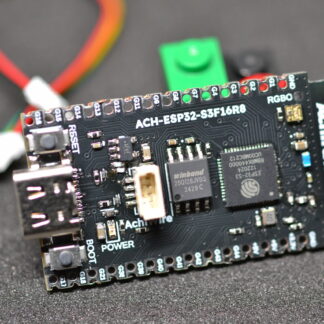
The ACH-ESP32-S3-F16R8 is an ESP32-S3 development board with 16 MB Flash and 8 MB PSRAM. Dual-core Xtensa LX7, WiFi and Bluetooth 5.0 — ideal for IoT, edge AI and connected prototypes.
Technical specifications
- MCU: ESP32-S3
- CPU: Dual-core Xtensa LX7 @ 240 MHz
- Flash: 16 MB
- PSRAM: 8 MB
- WiFi: 802.11 b/g/n (2.4 GHz)
- Bluetooth: 5.0 (BLE)
- USB: USB-C (power + programming)
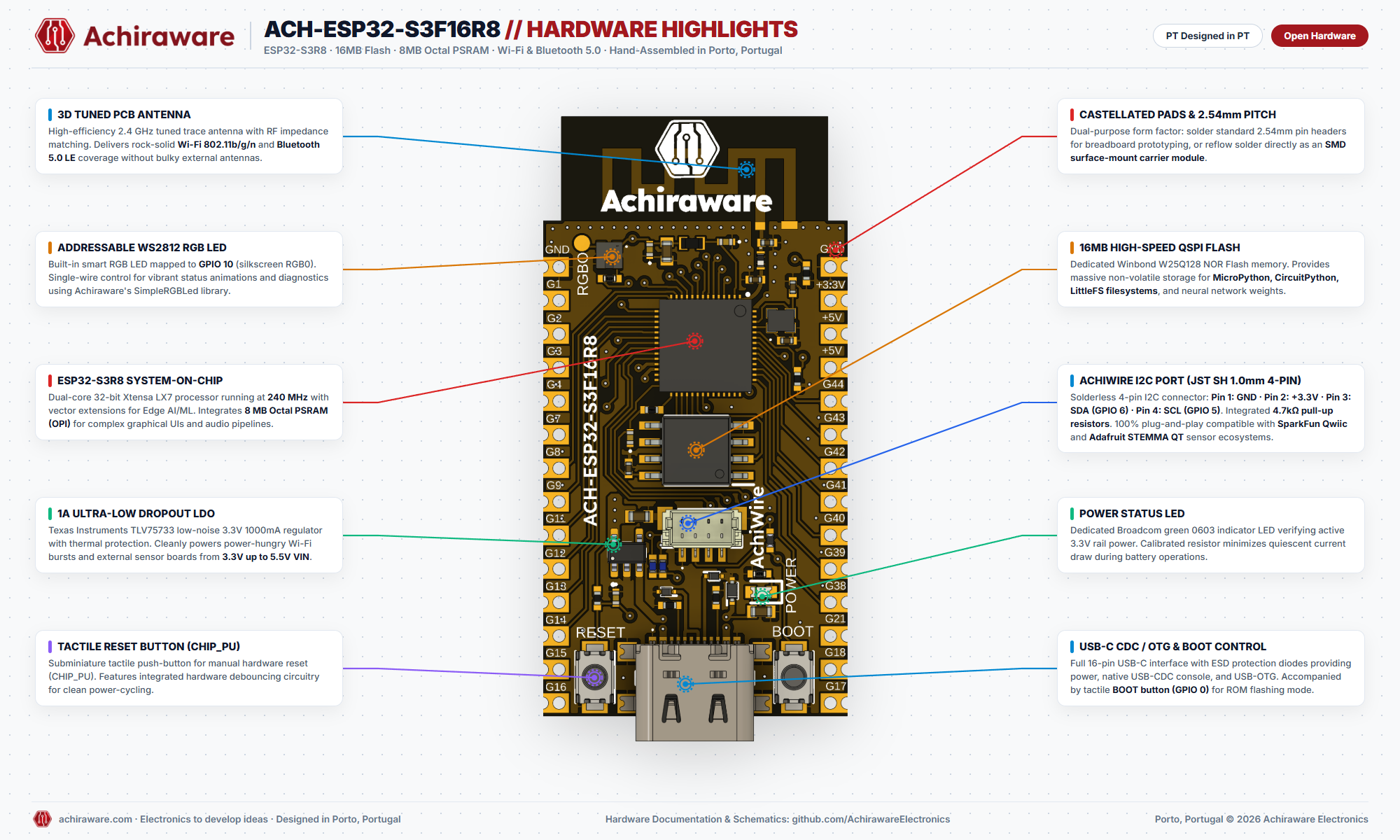
- AchiWire port: JST SH 1.0mm 4-pin · GND / +3.3V / SDA / SCL · compatible with Qwiic and STEMMA QT
- Logic level: 3.3 V
- Supply: 5 V via USB-C
Pre-flashed firmware included. I2C cable in the box. Designed in Porto, Portugal.
Description
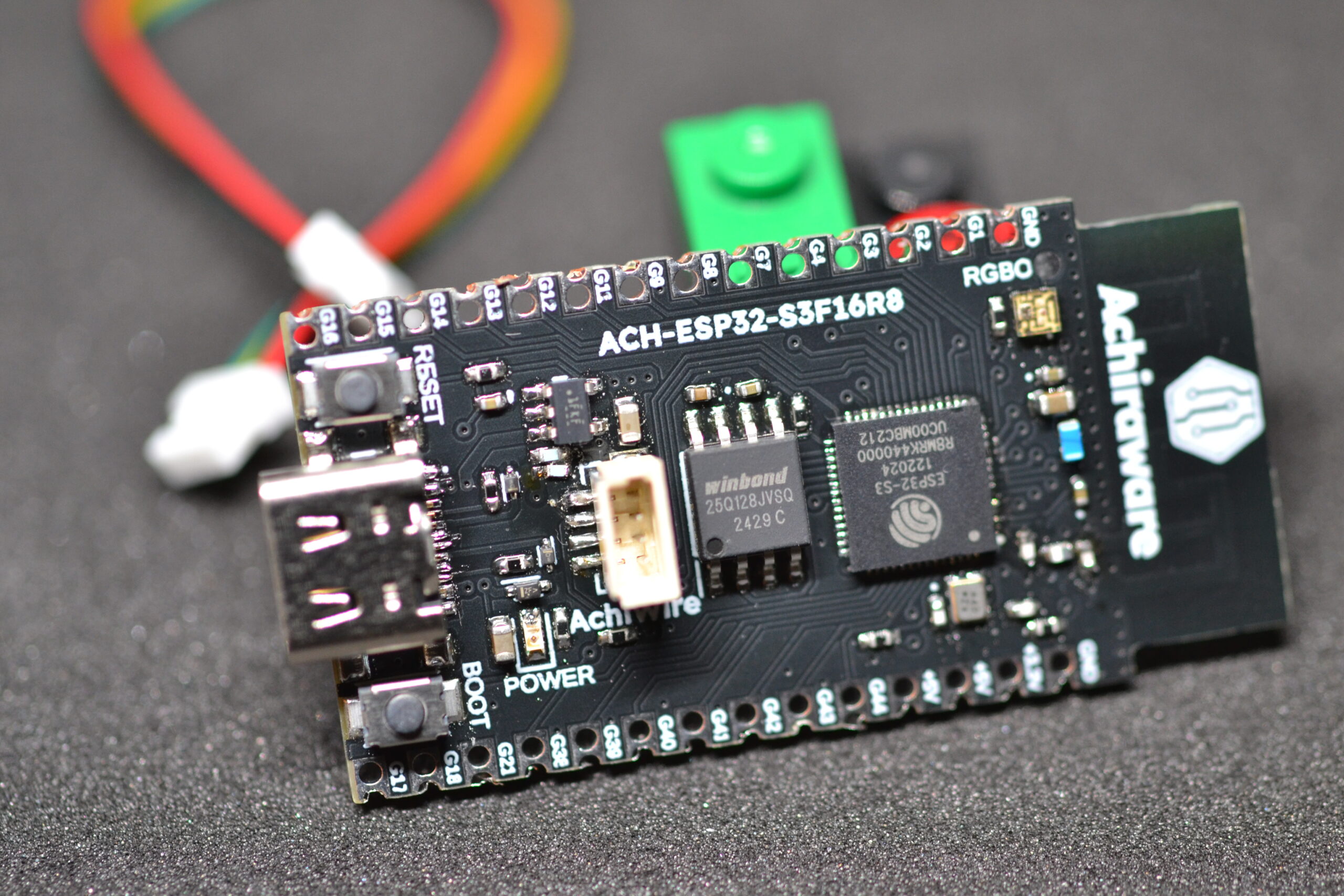
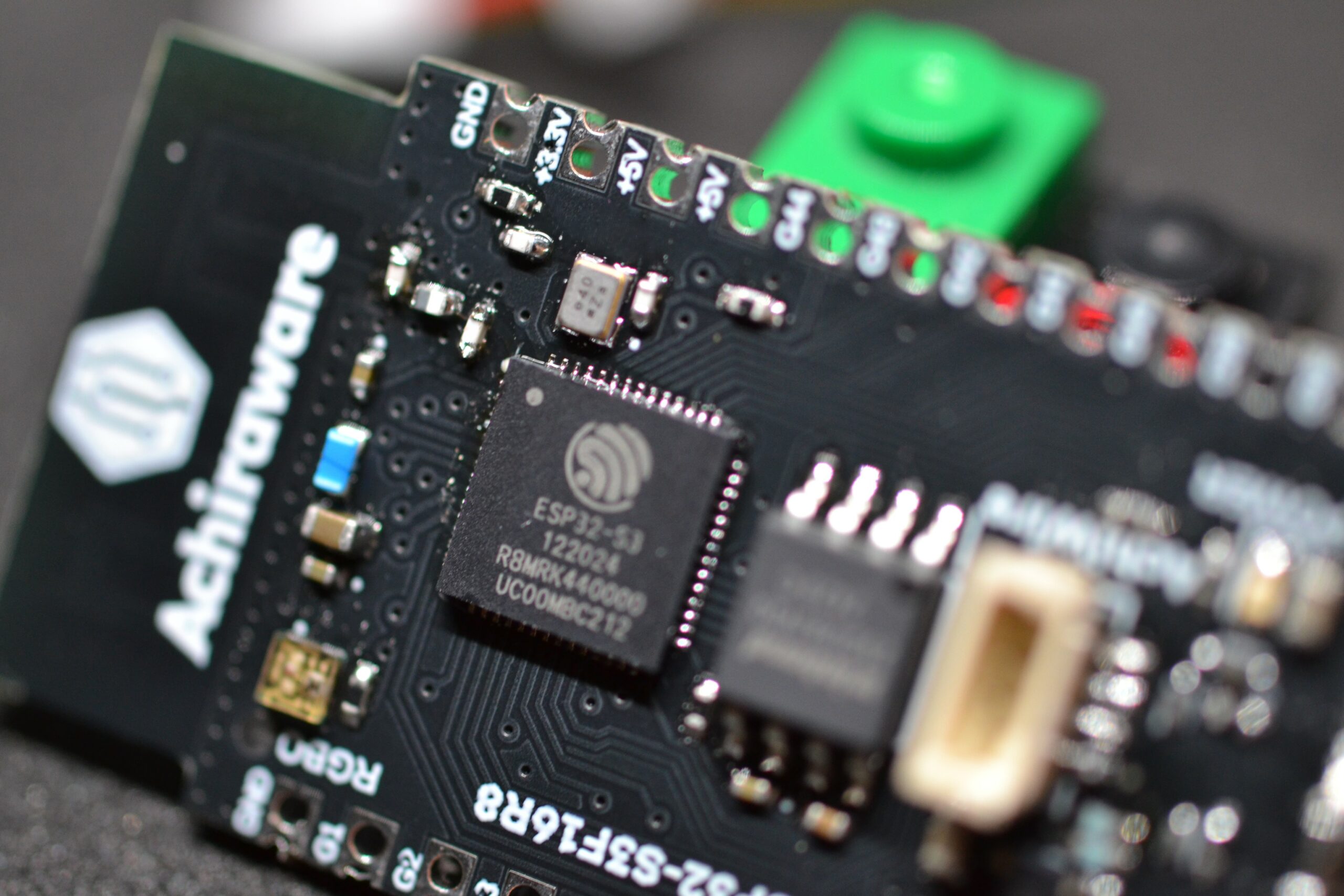
The AchiraWare flagship board — built around the ESP32-S3R8, Espressif’s top-tier variant with 16MB Flash and 8MB PSRAM. Designed and hand-assembled in Portugal.
Microcontroller
- ESP32-S3R8: dual-core Xtensa LX7 @ 240MHz
- 16MB external Flash · 8MB PSRAM
- 2.4GHz Wi-Fi 4 · Bluetooth LE 5.0 · USB-OTG
- Capable of running MicroPython, CircuitPython, TensorFlow Lite, LittleFS
Board features
- Precision-tuned PCB antenna — no external antenna needed
- Castellated holes + 2.54mm through-hole headers — use on breadboard or solder directly onto your PCB as a module
- JST SH 1.0mm I2C connector — compatible with Qwiic (SparkFun) and STEMMA QT (Adafruit)
- Addressable RGB LED (GPIO 10, WS2812) — use SimpleRGBLed library by AchiraWare
- USB-C — power, UART programming, and USB-OTG
- LDO voltage regulator 1A — power from 5V USB-C or up to 5.5V VIN
- All available GPIO broken out (internal PSRAM pins not exposed)
- Approximately 50 × 30mm · Designed in PT
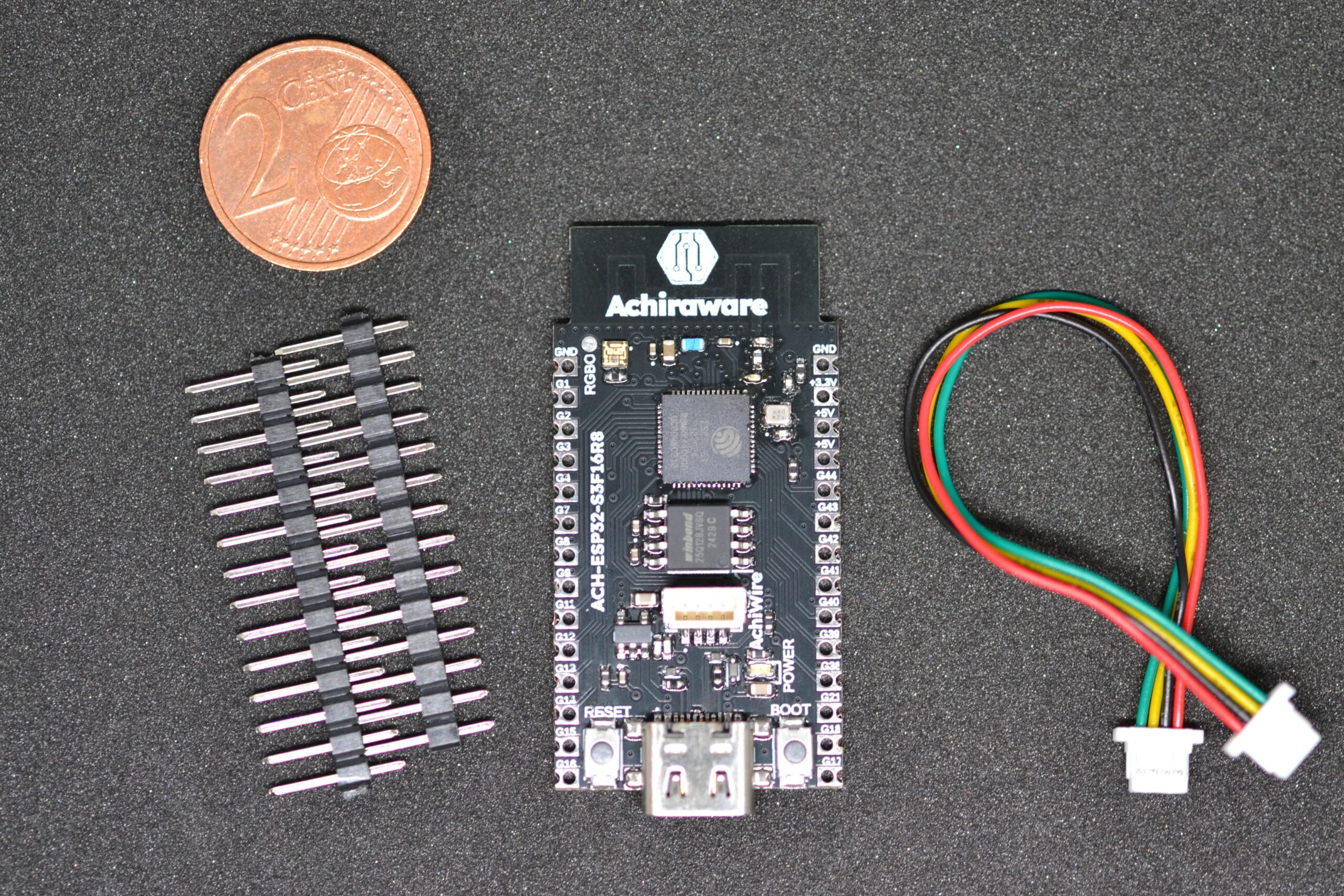
In the box
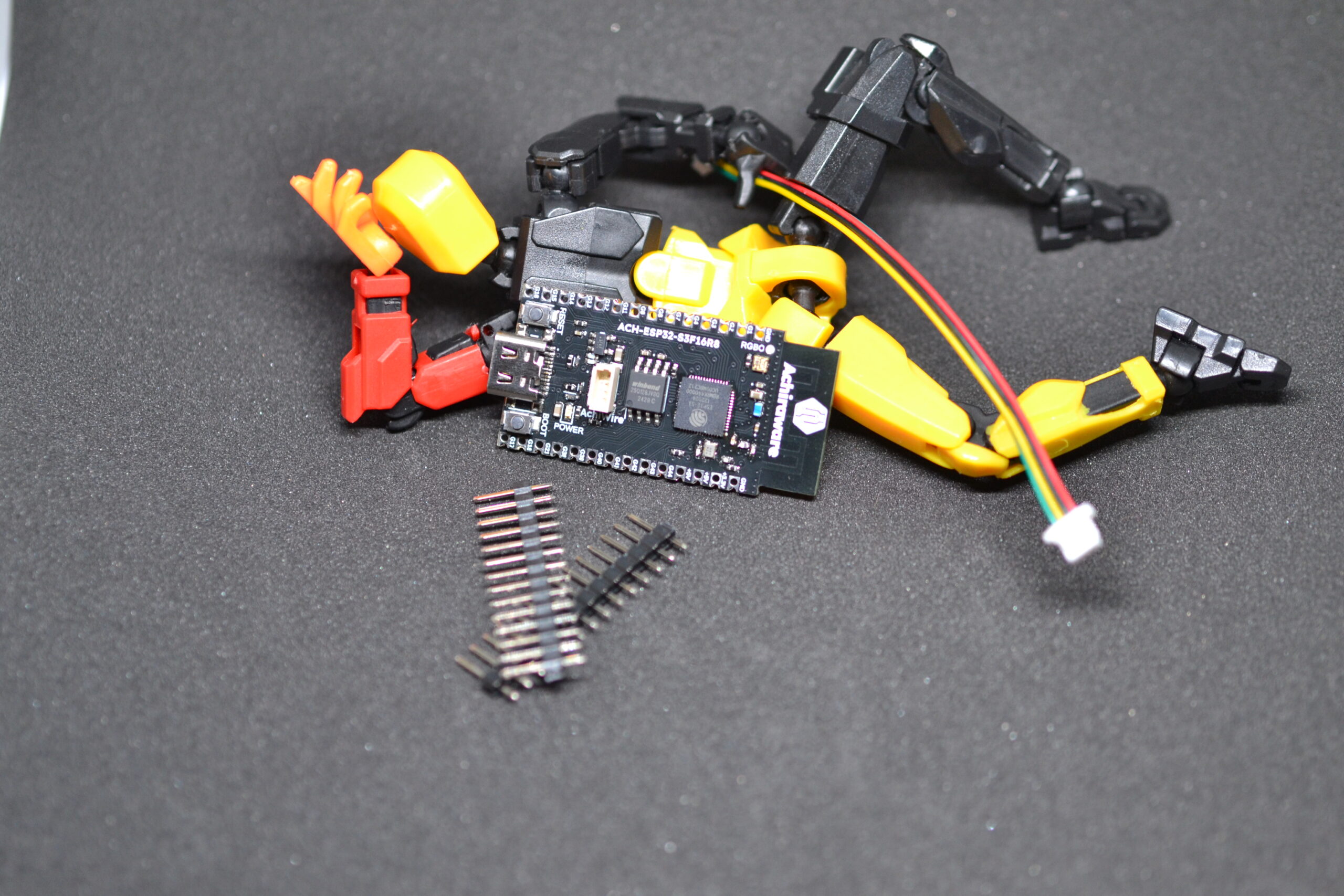
- ACH-ESP32-S3F16R8 board
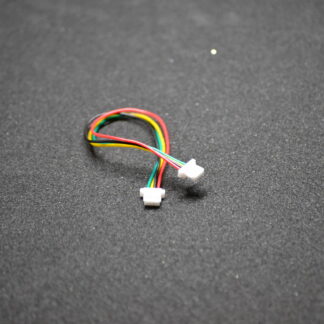
- JST SH 1.0mm 4-pin I2C cable
- 2.54mm male headers
Compatible with: ESP-IDF · Arduino framework · MicroPython · CircuitPython · Zephyr RTOS · TensorFlow Lite
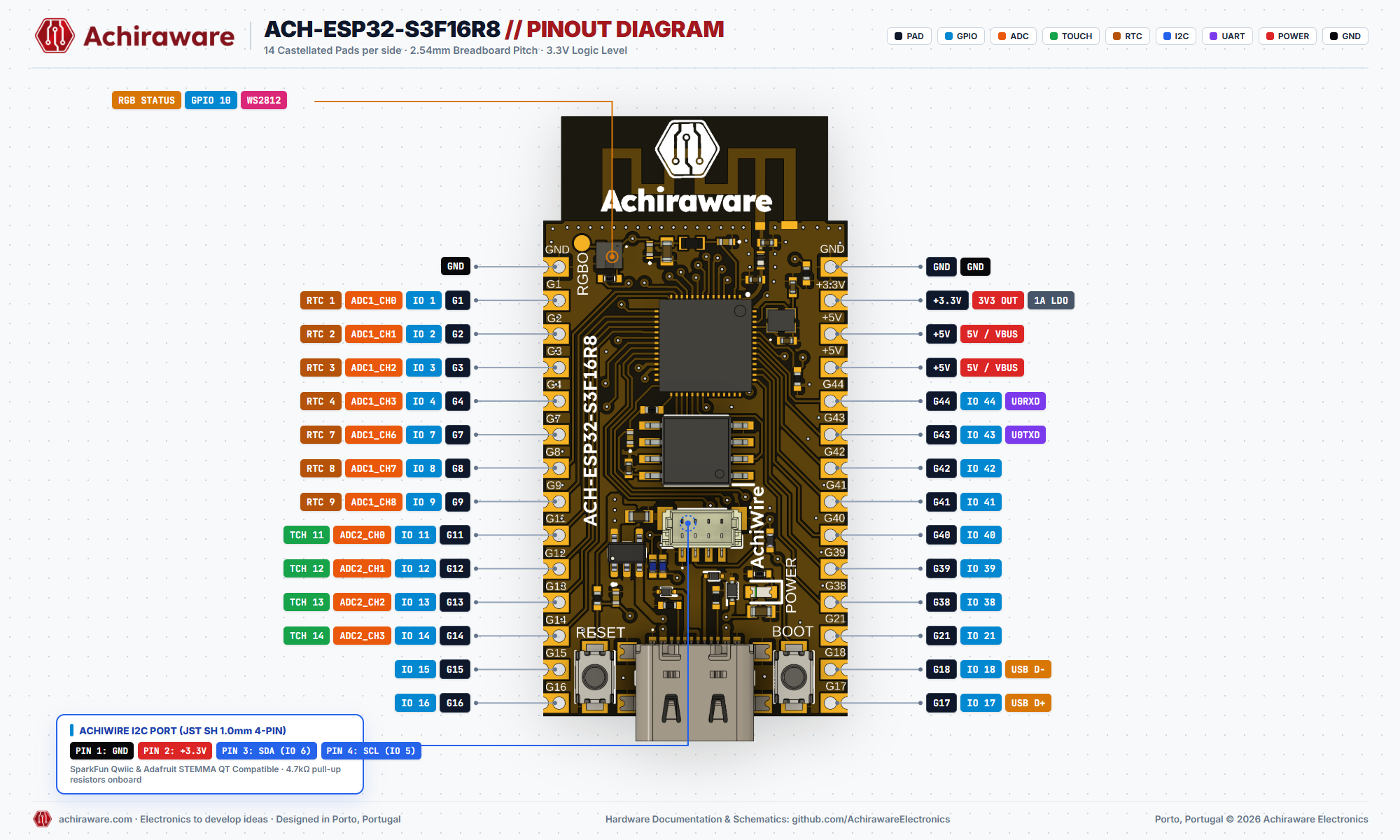
Pinout — GPIO exposed on the headers (2.54 mm)
| Left Pins |
Right Pins |
| GND |
GND |
| GPIO1 |
+3.3V |
| GPIO2 |
+5V |
| GPIO3 |
+5V |
| GPIO4 |
GPIO44 (UART TX) |
| GPIO7 |
GPIO43 (UART RX) |
| GPIO8 |
GPIO42 |
| GPIO9 |
GPIO41 |
| GPIO11 |
GPIO39 |
| GPIO12 |
GPIO38 |
| GPIO13 |
GPIO21 |
| GPIO14 |
GPIO18 |
| GPIO15 |
GPIO17 |
Dedicated Pin (not exposed in headers)
| GPIO |
Function |
Notes |
| GPIO10 |
LED RGB addressable (WS2812) |
Librery SimpleRGBLed (AchiraWare) o NeoPixel/FastLED |
| GPIO5 |
SCL — I2C |
Conecctor JST SH 1.0mm (AchiWire). Pull-up 4.7 kΩ integrated. |
| GPIO6 |
SDA — I2C |
Conecctor JST SH 1.0mm (AchiWire). Pull-up 4.7 kΩ integrated. |
Arduino IDE
- Connect the board with a data USB-C cable.
- Install the ESP32 Arduino core.
- Board: ESP32S3 Dev Module
- PSRAM: OPI PSRAM (required to enable the 8 MB)
- Select the correct COM port and upload your sketch.
ESP-IDF
- Install ESP-IDF.
- Set target and build:
idf.py set-target esp32s3
idf.py build flash monitor
Blink — RGB LED (Arduino)
The RGB LED is on GPIO 10 (WS2812 addressable). LED_BUILTIN is not defined on this board. Use the SimpleRGBLed library by AchiraWare (available in the Arduino Library Manager).
// ACH-ESP32-S3F16R8 — Blink RGB LED
// Board:   "ESP32S3 Dev Module"
// PSRAM:   "OPI PSRAM"
// Library: SimpleRGBLed (Arduino Library Manager)

#include <SimpleRGBLed.h>

#define LED_PIN 10   // RGB LED — GPIO 10

SimpleRGBLed led;

void setup() {
    led.begin(LED_PIN);
    led.setBrightnessPercent(40);
}

void loop() {
    led.setColor("green");
    delay(500);
    led.off();
    delay(500);
}
I2C — AchiWire Connector (JST SH 1.0 mm)
Compatible with Qwiic (SparkFun) and STEMMA QT (Adafruit). 4.7 kΩ pull-up resistors already on board — no external resistors needed.
- SDA → GPIO 6
- SCL → GPIO 5
#include <Wire.h>

void setup() {
  Wire.begin(6, 5);  // SDA=GPIO6, SCL=GPIO5
  Serial.begin(115200);
}

void loop() {
  // your I2C code here
}
GitHub Repository
Hardware design files, schematics, and code examples for the ACH-ESP32-S3-F16R8.
View on GitHub →

Reviews
There are no reviews yet.